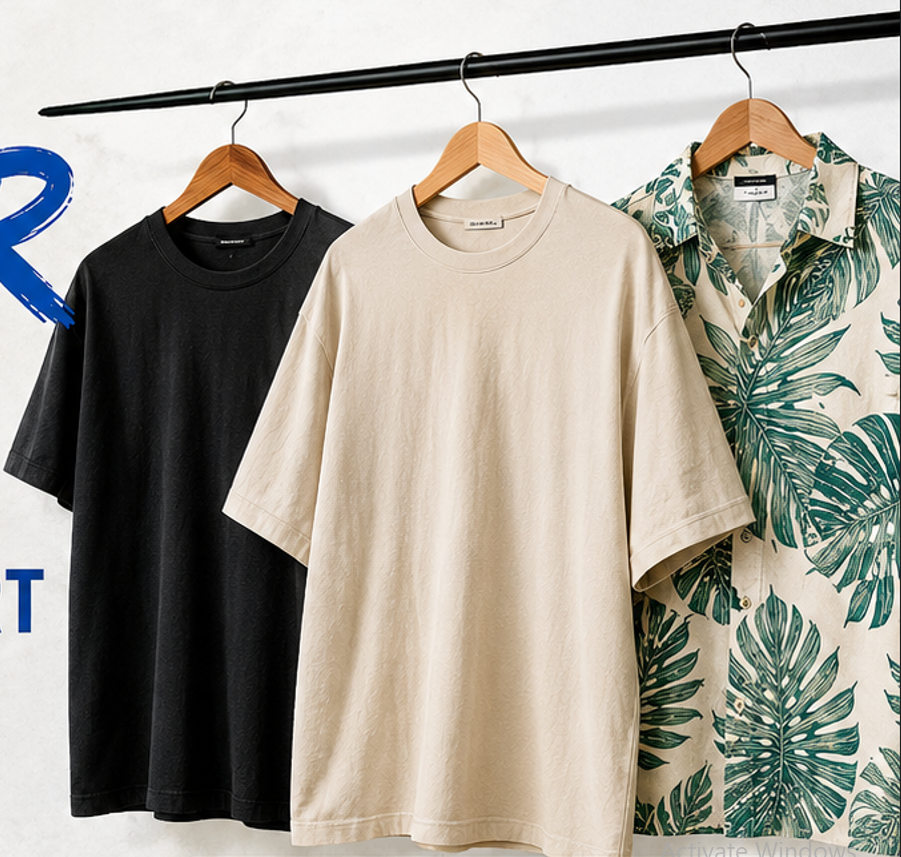
How to Find a Low MOQ Garment Manufacturer in Bangladesh for Your Streetwear Brand
Starting a streetwear brand without bulk capital? Here is how to navigate low MOQ manufacturing in Bangladesh for your first 100-piece drop.
Starting a streetwear brand and launching your first collection is one of the most exciting milestones for any founder. However, it often comes with a major roadblock: finding a manufacturer willing to produce small orders.
If you are just starting out, most tier-one clothing manufacturers in Bangladesh will turn you away. Built around bulk export orders for global retail giants, high-volume factories typically require minimum order quantities (MOQs) of 3,000 to 5,000+ units per style. For a first drop or a small capsule collection, that volume is financially unrealistic and creates unnecessary inventory risk.
The good news? A growing segment of private label manufacturers in Dhaka has adapted specifically to serve startup and emerging streetwear labels—offering low-MOQ production runs of 100 to 500 pieces for custom hoodies, t-shirts, joggers, and activewear.
Here is a practical guide on what actually works for low-MOQ streetwear manufacturing and what you need to look for in a partner.
Why Finding a Genuine Low MOQ Manufacturer Is Hard
The challenge isn't finding "a clothing factory in Bangladesh"—the country has thousands of them. The challenge is finding a small-batch manufacturer whose entire operation (sampling process, fabric sourcing, production line scheduling) is explicitly built for low minimum order quantities, rather than tolerating small orders as a temporary favor.
When evaluating potential suppliers, pay close attention to these key constraints:
1. Headline MOQ vs. Real Order Minimums
A factory advertising a "100-piece MOQ" often means 100 pieces per color and style, not 100 pieces total across a multi-color collection. Always clarify how the minimum is split across sizes and colorways before getting attached to a factory.
2. Fabric Sourcing & Mill Minimums
Often, the primary bottleneck for low-volume production is the fabric mill, not the cut-and-sew facility. Dye houses and fabric mills enforce minimum yardage requirements for custom knit or dyed fabrics. A startup-friendly manufacturer overcomes this by maintaining stock fabric programs, running shared dye lots, or leveraging mill relationships that absorb low-volume requests.
3. Streetwear-Specific Finishing Capabilities
Streetwear relies heavily on specialized construction and post-processing techniques:
- Heavyweight Fabrics: High GSM fleece (350–500+ GSM) and heavyweight single jersey.
- Custom Silhouettes: Oversized fits, boxy cuts, and dropped shoulders.
- Specialized Printing & Washes: Puff printing, high-density embroidery, chenille patches, acid washing, and garment dyeing.
These processes carry higher setup complexity. You need an apparel manufacturer that can handle these techniques cleanly at low volumes without exorbitant per-unit setup fees.
4. Sample Turnaround Speed
When starting out, you need to iterate quickly on fit and fabric before committing capital to bulk production. A manufacturer suited for emerging brands will move Pre-Production Samples (PPS) in 7–10 days rather than putting your tech pack behind bulk clients.
5 Questions to Ask Before Signing a Contract
- MOQ Breakdown: Is the 100-piece minimum per style, per colorway, or total across the entire order?
- Fabric Minimums: Can I order custom GSM and dyeing at 100 units, or do I need to choose from available stock colors?
- In-House Capabilities: Do you manage screen printing, embroidery, puff print, and garment washes in-house or through verified partners?
- Sample Timeline & Fees: What is the turnaround time for fit samples, and are sample fees deductible from the bulk order total?
- Quality Control & Shipping: What quality inspection standards (e.g., AQL 2.5) do you follow, and do you handle express air and sea freight logistics to my country?
Low MOQ Streetwear Manufacturing with Sabera
Based in Dhaka, Bangladesh, Sabera is a private label clothing manufacturer engineered specifically around a 100-piece minimum order quantity starting point. Built to support startup clothing brands and scaling streetwear labels, Sabera treats low-volume orders as core business—not an exception.
Standard Production Process
- Tech Pack Review & Sourcing: Custom GSM selection (180–500+ GSM), tech pack alignment, and size chart validation.
- PPS Prototyping: 7–10 day sample turnaround with strike-off approvals for prints, embroidery, and washes.
- Bulk Cut & Sew Production: Precision cutting, garment assembly, custom woven tags, care labels, and packaging.
- Quality Control & Worldwide Export: AQL 2.5 quality inspection checks and door-to-door shipping to the US, UK, EU, AU, and UAE.
Manufacturing Specifications Reference
| Garment Category | Standard Low-MOQ Range | Typical Fabric Specifications |
|---|---|---|
| Heavyweight Hoodies | 100 pcs / style / color | 350–500+ GSM Cotton Terry / Fleece |
| Streetwear T-Shirts | 100 pcs / style / color | 180–280 GSM 100% Cotton Single Jersey |
| Joggers & Sweatpants | 100 pcs / style / color | 350–375 GSM Brushed Back Fleece |
| Woven / Casual Shirts | 150 pcs / style / color | Cotton Twill, Canvas, or Poplin |
Final Thoughts
Launching your streetwear brand with a 100-piece MOQ in Bangladesh is entirely achievable. Success depends on partnering with a factory whose fabric sourcing, sampling, and line scheduling are structured specifically for small-batch apparel production.